
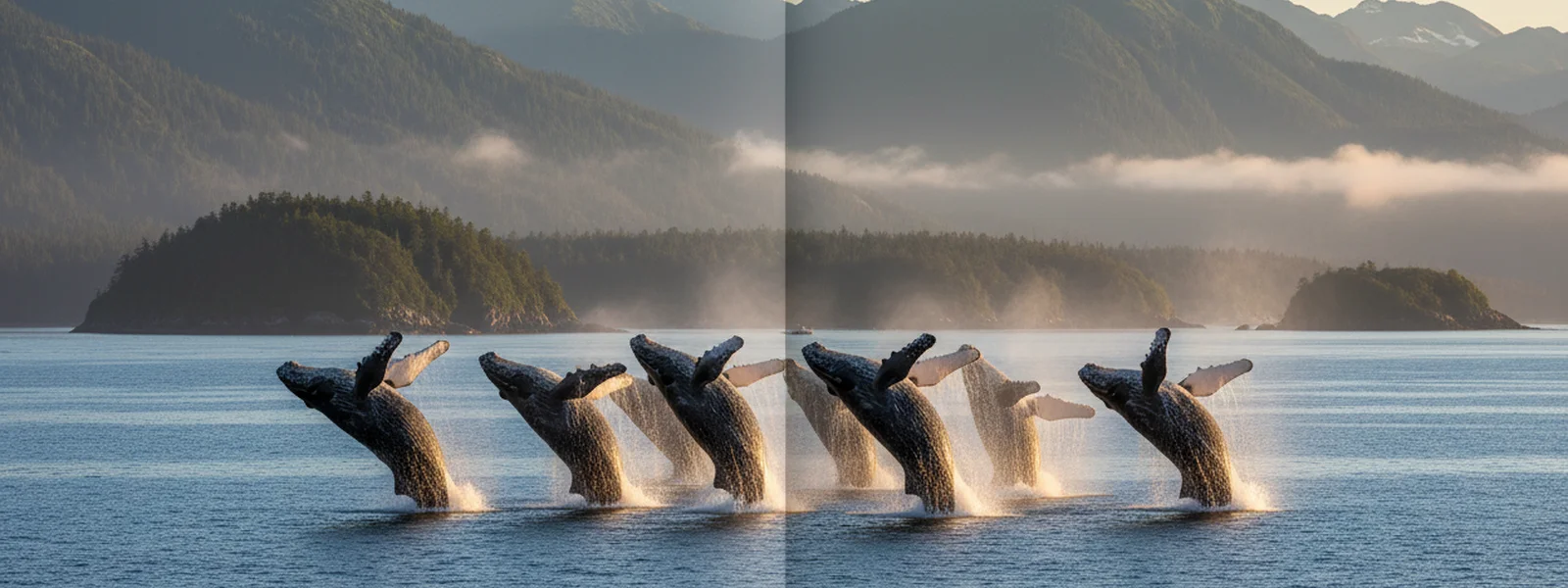
The Wild Wonders of the Inside Passage
An Alaska cruise offers a front-row seat to some of the planet's most spectacular wildlife. From the immense humpback whales breaching in the deep waters to the bald eagles soaring overhead, the Inside Passage is teeming with life. While no sighting is ever guaranteed, knowing what to look for and where to best spot these creatures can significantly enhance your Alaskan adventure. This list covers the wildlife you might see on an Alaska cruise, offering a glimpse into the rich biodiversity of this unique region.
Spotting wildlife is often a highlight of any Alaska cruise, and understanding the habits of these animals can make the experience even more rewarding. The sheer abundance of marine and terrestrial life is a testament to the health of these protected waters and vast wilderness areas. Whether you're scanning the sea from the deck of your ship or venturing out on a smaller excursion, keep your binoculars ready. The anticipation of spotting an Alaska cruise wildlife list favorite is part of the thrill.
Marine Mammals: Giants of the Deep
The waters of the Inside Passage are a critical feeding ground for several large marine mammals. Their presence is a strong indicator of a healthy ecosystem, and seeing them is often the pinnacle of an Alaska cruise wildlife experience.
Humpback Whales
Perhaps the most iconic marine mammal encounter on an Alaska cruise, humpback whales are frequently seen bubble-net feeding in the nutrient-rich waters. Their enormous size and acrobatic breaches are unforgettable. You'll often spot their distinctively shaped flukes as they dive. Keep an eye out for the characteristic 'blow' or spout as they surface to breathe.
For those who find themselves drawn to these gentle giants, consider our Alaska Wildlife Shirts collection. Designs like the 'Befriend Everyone' tee capture the spirit of encountering these magnificent creatures.
Orcas (Killer Whales)
Orcas, or killer whales, are also residents of the Inside Passage. They are highly intelligent social animals, often seen in pods. Distinguishing between the resident orcas (which feed on fish) and transient orcas (which prey on marine mammals) can be challenging, but both are a thrilling sight. Look for their tall dorsal fins slicing through the water.
Dall's Porpoises and Harbor Porpoises
Smaller than whales, porpoises are often seen in groups, playfully bow-riding alongside cruise ships. Dall's porpoises are known for their speed and distinctive white markings, while harbor porpoises are a bit more elusive. Their presence often signals good fishing conditions.
Sea Otters
Sea otters are a delightful sight, often found floating on their backs in kelp beds. They are the heaviest members of the weasel family and play a crucial role in maintaining the health of kelp forests. Watching them use tools, like rocks, to crack open shellfish is a fascinating behavior.
If the marine world captivates you, explore our Glacier Bay Shirts and Alaska Wildlife Shirts for designs that celebrate the ocean's wonders.
Steller Sea Lions and Harbor Seals
You'll likely encounter sea lions and seals hauled out on rocky shores or floating near the water's surface. Steller sea lions are the largest of the eared seals, while harbor seals are more commonly seen closer to shore. Both are curious and can often be observed with ease from a safe distance.
Avian Spectacles: Eagles, Puffins, and More
Alaska's skies and coastlines are a haven for numerous bird species. From the majestic bald eagle to the colorful puffin, birdwatching opportunities abound on an Alaska cruise.
Bald Eagles
The bald eagle is a ubiquitous sight along Alaska's coastlines and waterways. You'll see them perched in tall trees, soaring overhead, or even diving for fish. Their presence is a powerful symbol of the wild and untamed nature of Alaska.
For those who appreciate these symbols of the wild, our Alaska Wildlife Shirts and All Alaska Cruise Shirts offer designs that honor these natural icons.
Puffins
Various species of puffins, including the tufted puffin and horned puffin, can be spotted in areas like Kenai Fjords National Park and along the coast. With their distinctive colorful beaks and comical waddle, they are a favorite among birdwatchers.
Seabirds Galore
Beyond eagles and puffins, expect to see a variety of gulls, cormorants, auklets, and murres. On longer boat excursions, you might even spot albatrosses, especially further offshore.
Terrestrial Mammals: Denizens of the Forest and Tundra
While marine life often dominates the cruise experience, venturing closer to shore or taking excursions into national parks can reveal a different set of fascinating creatures.
Bears: Grizzlies and Black Bears
Spotting bears is a thrilling possibility. Grizzlies, the larger brown bears, are often seen foraging along coastlines for salmon or in meadows. Black bears are more common and can be found in forested areas. Remember to always maintain a safe distance and never feed wildlife.
Our Alaska Bear Shirts collection features designs inspired by these powerful animals, capturing their presence in the Alaskan landscape.
Moose
Moose are Alaska's largest land mammals and can sometimes be seen in wooded areas or near wetlands, particularly in the interior. While less common on typical Inside Passage routes, they are a significant part of Alaska's wildlife. Seeing a moose is a truly special moment.
Mountain Goats and Dall Sheep
In mountainous regions, particularly near glaciers and steep cliffs, keep an eye out for mountain goats and Dall sheep. Their ability to navigate treacherous terrain is remarkable. They often appear as small white dots against the rugged landscape.
Other Mammals
Depending on the specific itinerary and excursions, you might also encounter smaller mammals like foxes, marmots, and beavers. Even the smallest creatures contribute to the vibrant ecosystem of Alaska.
A Note on Responsible Wildlife Viewing
Observing wildlife in Alaska is a privilege, and it's essential to do so responsibly. Always maintain a safe distance, whether on land or sea. Never feed wild animals, as this can disrupt their natural behaviors and diets, and can be harmful to them. Follow the guidance of your ship's naturalists and any local guides. Their expertise ensures both your safety and the well-being of the animals.
The wildlife encounters you experience will be deeply tied to the stunning landscapes of the Inside Passage Shirts collection, reflecting the natural beauty that supports these diverse species.
Enhance Your Alaska Cruise Wildlife Experience
To truly appreciate the wildlife you encounter, consider bringing appropriate gear. Binoculars are a must-have. A good field guide can help you identify different species. And, of course, a comfortable and stylish shirt that commemorates your trip is essential.
Our 2026 Alaska Apparel Collection and Comfort Colors Alaska Tees are designed with the traveler in mind, offering both comfort and a lasting memento of your Alaskan adventure. Wear them on deck as you scan the horizon, or back home as you recall the incredible sights.
An Alaska cruise is more than just a vacation; it's an immersion into a world of natural wonder. The wildlife you see will undoubtedly become some of your most cherished memories. From the colossal whales to the keen-eyed eagles, Alaska's wild inhabitants put on a show like no other. Remember to be present, soak it all in, and appreciate the incredible biodiversity this region offers.
For those who want a souvenir that reflects the authentic Alaska experience, rather than a generic trinket, our apparel captures the spirit of the landscape and its inhabitants. We believe in designs that tell a story, much like the wildlife encounters themselves.
Frequently Asked Questions About Alaska Cruise Wildlife
Here are some common questions about wildlife viewing on an Alaska cruise.
What is the best time of year to see wildlife on an Alaska cruise?
The peak season for wildlife viewing on Alaska cruises is generally from May through September. During these months, marine mammals like whales and sea lions are actively feeding in the Inside Passage, and bears are often seen along the coastlines. Salmon runs also attract bears and eagles, particularly in late summer.
What are the most common animals seen on an Alaska cruise?
The most commonly seen animals include humpback whales, orcas, Dall's porpoises, sea lions, seals, sea otters, and bald eagles. Black bears and grizzly bears are also frequently spotted, especially on shore excursions or in areas with visible salmon runs. You'll also see a variety of seabirds.
How far away should I stay from wildlife?
Regulations and best practices advise keeping a significant distance from all wildlife. For marine mammals, this often means at least 100 yards (about the length of a football field). For bears and other land mammals, maintain at least 100 yards for bears and 25 yards for other animals. Always follow the advice of your ship's naturalists and guides.
Can I see the Northern Lights on a summer Alaska cruise?
It is highly unlikely to see the Northern Lights on a typical summer Alaska cruise. The phenomenon requires dark skies, and during the summer months, Alaska experiences very long daylight hours, including the 'midnight sun' phenomenon. The best chances for seeing the aurora are during the fall, winter, and early spring months, typically from late August through March.
What should I bring to enhance my wildlife viewing experience?
Essential items include a good pair of binoculars for spotting distant animals, a camera with a zoom lens to capture clear photos, and a field guide to help identify species. Dressing in layers is also crucial, as Alaska's weather can change rapidly. Comfortable, waterproof footwear is recommended for any excursions.
Are there specific areas on an Alaska cruise route known for wildlife?
Yes, certain areas are renowned for wildlife. Glacier Bay National Park is exceptional for whales, sea lions, and puffins. The waters around Juneau and Icy Strait Point are excellent for whale watching. Areas with active salmon rivers, like those near Ketchikan, are good for spotting bears and eagles. The Tracy Arm and Endicott Arm fjords also offer opportunities to see marine life and coastal animals.

Published by Alaskan Cruise Shirts
Alaska, Worn Well
Frequently Asked Questions
What is the best time of year to see wildlife on an Alaska cruise?
The peak season for wildlife viewing on Alaska cruises is generally from May through September. During these months, marine mammals like whales and sea lions are actively feeding in the Inside Passage, and bears are often seen along the coastlines. Salmon runs also attract bears and eagles, particularly in late summer.
What are the most common animals seen on an Alaska cruise?
The most commonly seen animals include humpback whales, orcas, Dall's porpoises, sea lions, seals, sea otters, and bald eagles. Black bears and grizzly bears are also frequently spotted, especially on shore excursions or in areas with visible salmon runs. You'll also see a variety of seabirds.
How far away should I stay from wildlife?
Regulations and best practices advise keeping a significant distance from all wildlife. For marine mammals, this often means at least 100 yards (about the length of a football field). For bears and other land mammals, maintain at least 100 yards for bears and 25 yards for other animals. Always follow the advice of your ship's naturalists and guides.
Can I see the Northern Lights on a summer Alaska cruise?
It is highly unlikely to see the Northern Lights on a typical summer Alaska cruise. The phenomenon requires dark skies, and during the summer months, Alaska experiences very long daylight hours, including the 'midnight sun' phenomenon. The best chances for seeing the aurora are during the fall, winter, and early spring months, typically from late August through March.
What should I bring to enhance my wildlife viewing experience?
Essential items include a good pair of binoculars for spotting distant animals, a camera with a zoom lens to capture clear photos, and a field guide to help identify species. Dressing in layers is also crucial, as Alaska's weather can change rapidly. Comfortable, waterproof footwear is recommended for any excursions.
Are there specific areas on an Alaska cruise route known for wildlife?
Yes, certain areas are renowned for wildlife. Glacier Bay National Park is exceptional for whales, sea lions, and puffins. The waters around Juneau and Icy Strait Point are excellent for whale watching. Areas with active salmon rivers, like those near Ketchikan, are good for spotting bears and eagles. The Tracy Arm and Endicott Arm fjords also offer opportunities to see marine life and coastal animals.
First Look at New Alaska Designs
New ports, new parks, new wildlife — get first access to every new alaska cruise shirt drop plus insider packing tips for the Inside Passage.