
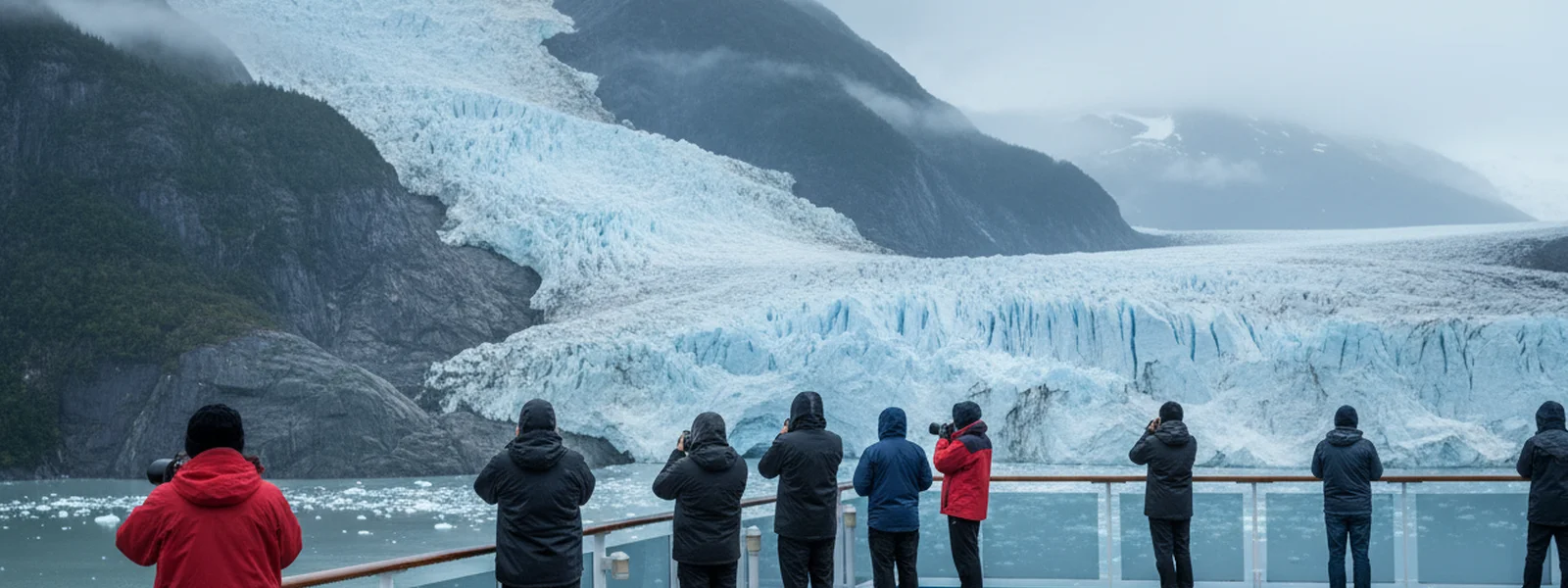
Preparing for Glacier Viewing in Alaska
An Alaska cruise often culminates in a day spent in Glacier Bay National Park, or perhaps sailing past the ice in Misty Fjords or Endicott Arm. These are the days you remember, the ones that anchor the entire trip. But they are also, predictably, the coldest days. Standing on the deck, watching a tidewater glacier calve into the sea, requires more than just a passing thought to your wardrobe. You need a proper glacier bay outfit, designed to keep you warm and comfortable when the wind carries a chill straight off the ice.
Many first-time cruisers underestimate the cold. Even in July or August, temperatures on deck during glacier viewing can hover in the low 40s to low 50s Fahrenheit, often with a significant wind chill. This isn't just a brisk morning; it's a sustained exposure to cold, damp air. Our experience, after many sailings through these waterways, confirms that thoughtful layering is the key to enjoying every minute, rather than retreating to the warmth of the solarium.
The Layering Principle: Base, Mid, Outer
Think of your clothing in three distinct layers, each serving a specific purpose. This approach is standard for anyone spending time outdoors in variable conditions, and it's essential for a comfortable Glacier Bay National Park experience.
-
Base Layer: This is the layer against your skin. Its primary job is to wick moisture away from your body, preventing that clammy, cold feeling if you start to perspire. Avoid cotton for your base layer; it absorbs moisture and holds it against your skin, making you colder. Opt for merino wool or synthetic fabrics.
-
Mid Layer: This layer provides insulation, trapping warm air close to your body. Fleece jackets, wool sweaters, or even a thick long-sleeve tee can work well here. The thicker the mid-layer, the more warmth it provides. This is where pieces like our Alaska Long Sleeve Shirts or a comfortable crewneck sweatshirt come into play, offering both warmth and a classic look.
Our Alaska 1959 Statehood Vintage T-Shirt, while a tee, is a good example of a comfortable layer to build upon when choosing your Glacier Bay outfit.
-
Outer Layer: This is your shield against the elements. It needs to be windproof and water-resistant (or fully waterproof) to protect your inner layers from the cold wind and any spray from the ocean or calving ice. We'll delve deeper into outer layers shortly, but remember, this is arguably the most critical component of your cold weather gear for an Alaska cruise.
The Importance of Windproof Outer Layers
The air temperature during glacier viewing might be 48°F, but a 15-knot wind off the face of Margerie Glacier can make it feel like 35°F. This wind chill is what truly cuts through inadequate clothing. A good outer shell, often called a hardshell or softshell jacket, is non-negotiable for anyone planning to spend extended time on the ship's outer decks. Look for jackets with sealed seams and adjustable cuffs and hoods to keep the cold out.
When selecting your outer layer, consider if it has enough room to accommodate your mid-layers without feeling restrictive. You want to be able to move freely, especially if you're holding binoculars or a camera. A jacket that is too tight will compress your insulating layers, reducing their effectiveness.
Waterproof Pants for Spray Protection
While often overlooked, waterproof pants can make a significant difference in your comfort. Standing near the railing on the lower decks, or even just walking along the promenade, can expose you to sea spray, especially on a breezy day. Wet pants quickly lead to cold legs, which can diminish your enjoyment. Lightweight, waterproof rain pants can be pulled over your regular trousers, providing an essential layer of protection.
These don't need to be heavy-duty ski pants. Simple, packable rain pants are usually sufficient. They pack down small, weigh little, and are easy to pull on when conditions change. This is a practical addition to your glacier bay outfit that many veteran cruisers recommend.
Footwear: Insulated, Waterproof Boots
Your feet are particularly susceptible to cold, especially when standing on a metal deck. Insulated, waterproof boots are the ideal choice for glacier viewing. They keep your feet dry from any standing water or spray and provide crucial warmth. Good traction is also a benefit, as decks can become damp or slippery.
Leave the open-toed sandals and canvas sneakers for warmer climates. Even comfortable walking shoes may not offer enough protection from the cold and dampness. Wool socks, worn inside your waterproof boots, will add another layer of warmth and moisture-wicking capability.
Accessories: Warm Hat, Gloves, Scarf
These small items have a disproportionately large impact on your overall warmth. A significant amount of body heat can be lost through an uncovered head. A warm, windproof hat is essential. Look for one that covers your ears fully.
Gloves are equally important. Your hands will get cold quickly, especially if you're holding binoculars or a camera. Waterproof or water-resistant gloves are best, allowing you to handle equipment without your hands getting wet and chilled. A scarf or neck gaiter can seal the gap between your jacket and hat, preventing cold air from seeping in.
Our Alaska Cruise Hoodies are a popular choice for this exact reason. The hood provides an extra layer of warmth for your head and neck, making it genuinely useful on deck during cold mornings in Glacier Bay and Misty Fjords.
Camera Gear and Binoculars
While not apparel, these are deck viewing essentials. You've come all this way to see glaciers and wildlife, and you'll want to capture it. Bring a camera with a good zoom lens, and make sure it's protected from moisture. A small, dry bag or a waterproof cover can be invaluable.
Binoculars are arguably more important than a camera. They bring distant glaciers, mountain goats on cliffsides, and whales breaching into sharp focus. Even if your cruise line provides some for communal use, having your own pair means you won't miss a moment. Consider models that are waterproof and fog-proof.
We know the feeling of being captivated by the ice, which is why we offer designs like our 2026 Alaska Cruise Most Likely to be Amazed by Glaciers T-Shirt, a perfect nod to the experience.
Our Apparel Picks for Maximum Comfort
We started Alaskan Cruise Shirts because we saw a gap in what was available for travelers who wanted stylish, durable apparel that actually fit the Alaska experience. Our designs, inspired by the WPA national-park posters of the 1930s, are made to be worn on deck and still look good back home.
For a full Glacier Bay outfit, we recommend starting with a comfortable base layer, then adding one of our Comfort Colors Alaska Tees. These garment-dyed shirts offer a lived-in feel and a heavier weight than standard tees, making them excellent mid-layers. Over that, a warm fleece or wool sweater, topped with a windproof and water-resistant jacket. Don't forget your hat, gloves, and waterproof pants.
Our goal is to provide souvenirs that are more than just a memory; they're genuinely useful garments for your trip. A good hoodie, for instance, isn't just a piece of apparel; it's a practical layer for those 50°F mornings when the wind off the ice is a real chill. We design for the reality of the Inside Passage, not just the postcard.
For those who prefer a classic, no-hood silhouette, our Alaska Cruise Sweatshirts offer the same warmth and WPA-poster aesthetic, perfect for layering on a cold deck.
Ultimately, the best glacier bay outfit is the one that allows you to stay on deck for as long as you wish, taking in every vista, every calving rumble, and every glimpse of wildlife without being distracted by the cold. Plan ahead, layer thoughtfully, and you'll have an experience that lasts long after the ship sails away.

Published by Alaskan Cruise Shirts
Alaska, Worn Well
Frequently Asked Questions
What is the typical temperature during glacier viewing days?
Even in peak summer months like July and August, temperatures on deck during glacier viewing in places like Glacier Bay can range from the low 40s to low 50s Fahrenheit. The wind coming off the ice can make it feel significantly colder.
Why is layering so important for an Alaska cruise?
Layering allows you to adapt to rapidly changing weather conditions. Alaska's climate can shift from sunny to rainy, and temperatures can vary widely from port to open water. A base, mid, and outer layer system provides flexibility to add or remove clothing as needed for comfort.
Should I bring waterproof pants for glacier viewing?
Yes, waterproof pants are highly recommended. They protect against sea spray on deck and light rain, which can quickly lead to discomfort. Lightweight, packable rain pants that fit over your regular trousers are an excellent choice.
What kind of footwear is best for cold deck viewing?
Insulated, waterproof boots are ideal. They keep your feet dry and warm, which is crucial when standing on a cold, potentially damp deck for extended periods. Pairing them with wool socks enhances warmth and moisture-wicking.
Are hats and gloves really necessary in summer for an Alaska cruise?
Absolutely. A significant amount of body heat is lost through your head, and hands can get very cold quickly, especially when exposed to wind. A warm hat that covers your ears and water-resistant gloves are essential accessories for comfort during glacier viewing.
What are deck viewing essentials besides clothing?
Beyond your glacier bay outfit, binoculars are critical for spotting distant wildlife and intricate glacier details. A camera with good zoom, protected from moisture, is also important for capturing the scenery. Don't forget sunglasses to reduce glare off the ice.
First Look at New Alaska Designs
New ports, new parks, new wildlife — get first access to every new alaska cruise shirt drop plus insider packing tips for the Inside Passage.